
The much-anticipated Consumer Price Index (CPI) was released the week of January 12. For those seeking evidence that inflation will soon be back at the Fed’s target level, it wasn’t the triumph it might have been. Even so, rates managed to move lower.
Mortgage rates and, indeed, most rates are determined by trading levels in the bond market. Bond yields/rates move higher when inflation is high, and the market has been waiting on signs of lower inflation before trading in a way that allows interest rates to move lower.
The Consumer Price Index (CPI) is the biggest name in monthly inflation reports. It’s caused big reactions in rates many times over the past few years. In recent months, it’s been showing more and more promise regarding a return to inflation levels that would allow for significantly lower rates.
But CPI has given false hope before, so traders are wary. This week’s report definitely stopped short of providing resounding confirmation that inflation is defeated. That said, it didn’t send any signals that were too troubling either.
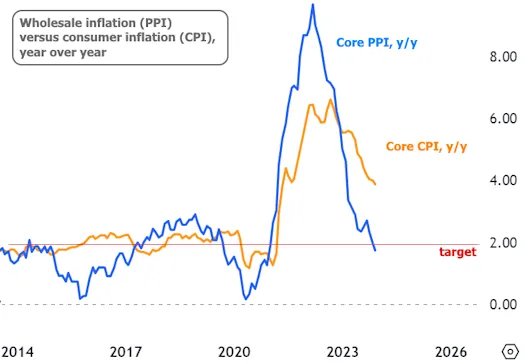
With that in mind, it’s not too surprising that rates actually didn’t move much in response to CPI. If anything, the initial impulse was toward slightly higher rates. It wasn’t until the following day’s Producer Price Index (PPI) that bond traders saw better evidence of calmer inflation. Both CPI and PPI have been moving lower, but PPI is now all the way back down to target levels.
The following chart shows how 10yr Treasury yields (which tend to correlation with mortgage rate movement) were reacting throughout the week:
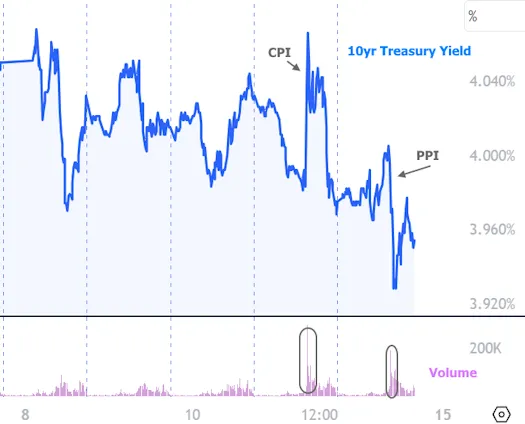
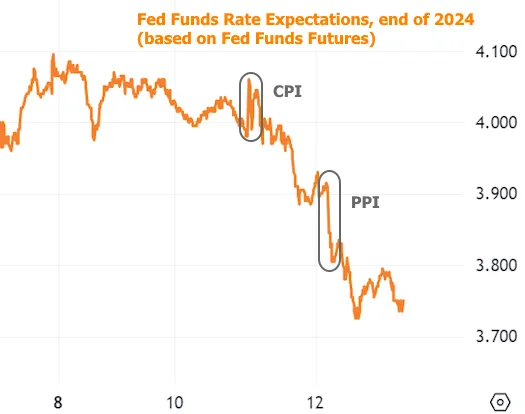
Note the initially bad reaction to CPI. There was a recovery that same afternoon for a variety of potential reasons. At least one of those reasons had to do with speculation that the Fed is still on track to deliver a series of rate cuts this year in addition to making rate-friendly changes to the way it’s managing its bond portfolio. Fed policy expectations are even easier to see when we look at actual Fed Funds Rate expectations which are now at the lowest levels since July.
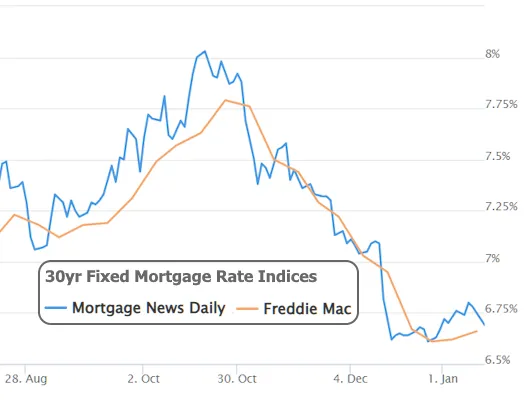
The following chartMortgage rates don’t correlate perfectly with Fed Funds Rate expectations (one reason we often advise that a Fed rate cut/hike doesn’t mean a mortgage rate cut/hike). As such, they’re not back below the recent lows, but they definitely haven’t moved much higher. This week’s gentle descent means we’re continuing to hold a vast majority of the improvement seen in Nov/Dec.
shows how 10yr Treasury yields (which tend to correlation with mortgage rate movement) were reacting throughout the week:
Looking ahead, while next week doesn’t have any economic data on the same level as CPI, Wednesday’s Retail Sales report can definitely move the needle. It’s expected to improve slightly to 0.4% month over month after hitting 0.3% last time.
Beyond the data, we’ll hear from several Fed speakers and there’s been some speculation that Waller’s appearance at the Brookings Institute will bring some important concepts regarding the precursors for friendlier rate policy in 2024. That will happen on Tuesday, which is the first business day of the week next week due to the Martin Luther King Jr. holiday.
While not as much of a factor for interest rates, we’ll also get updates on several key housing metrics including new home construction, builder confidence, and Existing Home Sales.
Rates move; your loan term is the part you control. If you are weighing payment against total interest, read the 15-year versus 30-year decision, and if you already own, see whether refinancing would lower your payment.
Call me at (615) 671-9178. That’s the fastest way to get a straight answer on what you’d qualify for and what both payments would actually look like for you.
If it’s after hours, grab a time on my calendar. Pick a slot that works and I’ll call you then.
If your life is too chaotic for a phone call right now — I understand — start an application and I’ll review it and reach out with a plan.